Beauty and Longevity
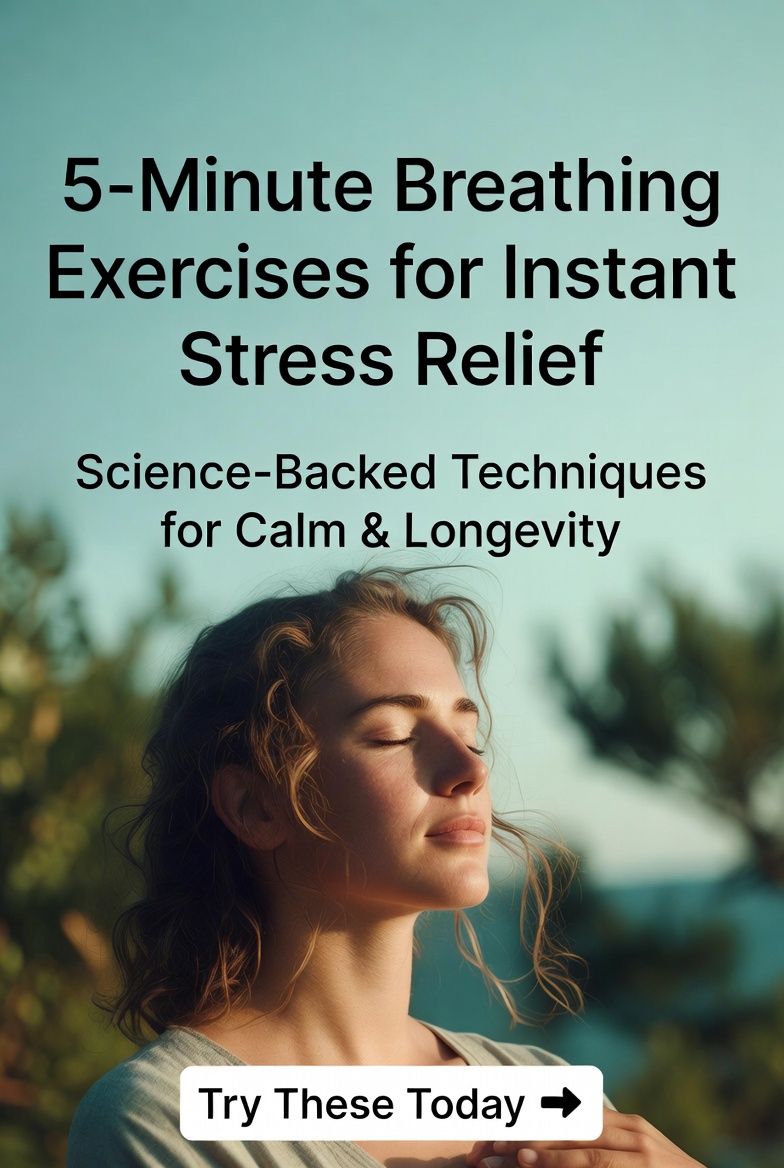
5-Minute Breathing Exercises
to switch off stress on demand
Your breath is the one part of your stress response you can control directly. These five techniques take five minutes or less and work by talking to your nervous system in the only language it listens to.
Chronic stress does real damage: it raises cortisol, disrupts sleep, and ages your skin faster. You cannot always change what is stressing you, but you can change how your body responds to it, and breathing is the fastest lever you have.
Why it works: slow, controlled breathing activates the vagus nerve and your rest-and-digest system, slowing the heart and lowering cortisol within minutes. No app or equipment required. Pick one below and try it now.
The one used by athletes and the military for calm under pressure. Inhale for four counts, hold for four, exhale for four, hold for four. Repeat. It steadies both your heart rate and a racing mind.
Inhale through the nose for four counts, hold for seven, and exhale slowly through the mouth for eight. The long exhale is the active ingredient, tipping you firmly into the relaxation response.
Put a hand on your belly and breathe so that hand rises, not your chest. Most of us shallow-breathe into the chest all day, which keeps the body mildly on alert. This resets the default.
Close your right nostril and inhale through the left, then close the left and exhale through the right, and continue alternating. It sounds fussy but reliably produces a balanced, settled calm.
Two quick inhales through the nose (a big one, then a small top-up) followed by one long, slow exhale through the mouth. This is the fastest known way to drop stress in real time, in a single breath.
Small things that help the habit stick
A few of the links below are affiliate links. They cost you nothing extra and help keep the site going.
🧘Worth Trying
Meditation cushion
For a comfortable five minutes
The main reason people skip breathing practice is a fidgety, uncomfortable seat. A proper cushion makes sitting still for five minutes something you actually want to do.
View on Amazon →Worth Trying
Essential oil diffuser
A cue for your nervous system
Pairing a scent like lavender with your practice trains your body to downshift the moment it hits the air. A simple, quiet ritual anchor.
View on Amazon →Worth Trying
Breath training device
For building lung strength
If you want to go further, a resistance breath trainer strengthens the diaphragm and makes slow breathing feel more natural over time.
View on Amazon →The trick is doing it before you need it
Breathing works in a crisis, but it works far better as a daily habit that keeps your baseline low to begin with. Attach one practice to something you already do, like the first five minutes after you sit at your desk, and it will be there when you actually need it.
You cannot always control what happens to you. You can always control the next breath, and that is often enough to change everything downstream of it.
Frequently asked questions
How do breathing exercises actually reduce stress?
Slow, controlled breathing, especially a long exhale, activates the vagus nerve and your rest-and-digest system. That slows your heart rate, lowers cortisol, and signals to your brain that you are safe, usually within a couple of minutes.
What is the best breathing exercise for quick stress relief?
The physiological sigh is the fastest: two inhales through the nose followed by one long exhale through the mouth. You can feel the drop in tension within a single breath, which makes it ideal for stressful moments in real time.
How long do I need to breathe to feel calmer?
Most people feel a shift within two to five minutes. A single physiological sigh can help almost instantly, while techniques like box breathing or 4-7-8 usually need a few rounds to fully settle the system.
When is the best time to do breathing exercises?
Any time, but the biggest payoff comes from a short daily practice that keeps your baseline calm, plus using a quick technique the moment stress spikes. Many people like one session in the morning and 4-7-8 breathing before sleep.
Breathing is step one of managing stress
Calming the breath is the fastest lever. See the fuller picture of what keeps stress and cortisol in check.
Read: Ways to Lower CortisolWritten by Soter. This article is educational and not medical advice. If you feel dizzy during any breathing exercise, return to normal breathing, and speak to a professional if you have a respiratory or heart condition.
Breathing is one tool for a calmer nervous system. Go further with how to lower cortisol and the best adaptogens for stress.