The History of Coffee
The history of coffee is rich and spans several centuries, intertwining with cultural, economic, and social developments around the world. Here’s a condensed look at the journey of coffee from its origins to its global spread:
Origins (9th Century – Ethiopia)
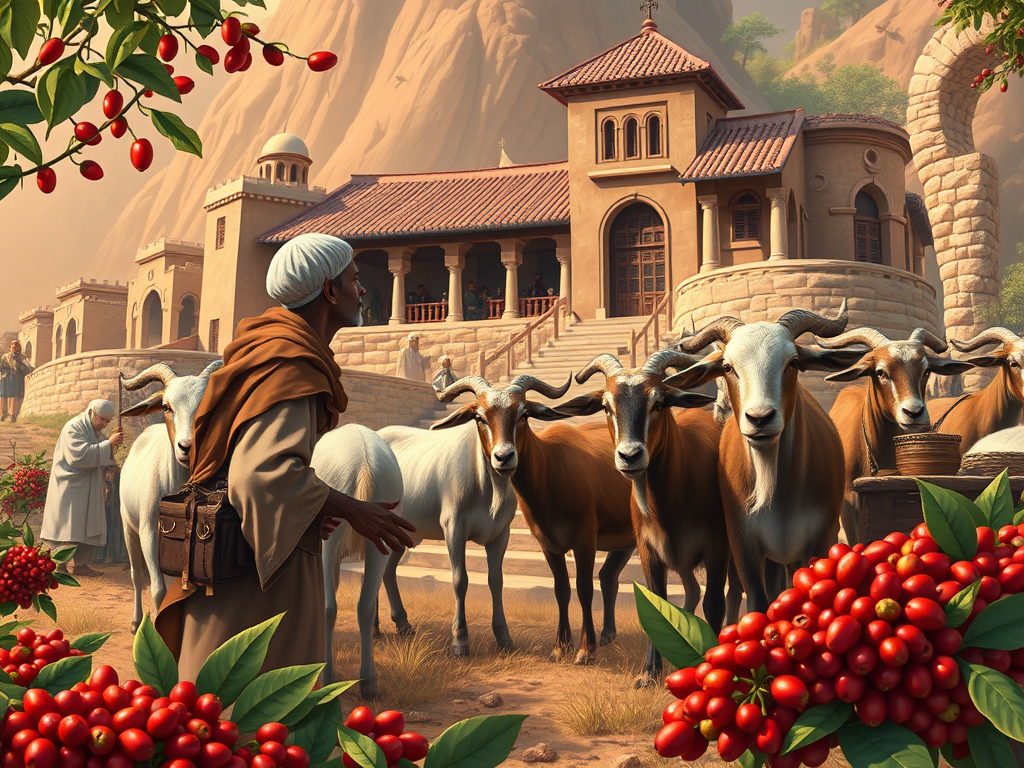
- Legend of Kaldi: The most famous story involves an Ethiopian goatherd named Kaldi. He noticed his goats becoming more energetic after eating red coffee cherries. This tale, while charming, is more folklore than fact.
- Monastic Use: Coffee’s stimulating effects were recognized by Ethiopian monks who used it to stay awake during long prayer sessions. They have been the first to roast, grind, and brew coffee in a form we recognize today.
Spread to the Arabian Peninsula (15th Century)
- Yemen: By the 15th century, coffee cultivation had spread to Yemen where it was cultivated and traded. Here, coffee was not just consumed but also became central to social life in coffee houses or “qahveh khaneh.”
- Sufi Monks: Sufi monks used coffee to keep themselves alert during religious rituals. This practice further spread its use across the Arabian Peninsula.
Expansion to the Ottoman Empire (16th Century)
- Istanbul Coffee Houses: Coffee reached Istanbul. It became an integral part of social life. This integration led to the establishment of many coffee houses. These were centers for conversation, music, and political discussions, sometimes leading to the term “coffeehouse culture.”
- Controversy and Regulation: Coffee faced opposition from some religious leaders. Political leaders also feared its stimulating effects. They worried that it would lead to social unrest. At times, coffee was banned, but these bans were short-lived.
Europe (17th Century)
- Venice: Europeans first encountered coffee through trade with the Ottoman Empire. Venice was one of the first places in Europe where coffee was sold.
- Coffee Houses in Europe: Coffee houses spread across Europe, becoming intellectual and social hubs. In London, these were known as “penny universities” where one could buy a cup of coffee and engage in discussion.
Colonial Expansion (17th – 18th Century)
- Dutch East India Company: The Dutch were among the first Europeans to cultivate coffee outside of Arabia. They started in Sri Lanka. Later, they expanded to Java (Indonesia), which became a major coffee producer.
- French and British Colonies: Coffee cultivation spread to colonies like Martinique in the French Caribbean. From there, it spread to other parts of the Caribbean, South America, and Africa.
Industrial Revolution and Beyond (19th – 20th Century)
- Industrialization: Increased mechanization led to mass production of coffee. Methods like the vacuum-sealed tin can and the invention of instant coffee transformed consumption patterns.
- Global Trade: Coffee became one of the world’s most traded commodities, influencing economies, especially in developing countries.
Modern Times
- Specialty Coffee Movement: From the late 20th century, there’s been a resurgence in artisanal coffee. This resurgence emphasizes origin and quality. It also focuses on ethical practices like Fair Trade.
- Cultural Impact: Coffee is a pivotal element in daily life. It also plays a crucial role in social interactions and health discussions. Ongoing research explores its benefits and effects.
The history of coffee is not just about the beverage itself. It is also about how coffee has influenced and mirrored human history. This influence spans from trade routes and economic systems to cultural and social life.