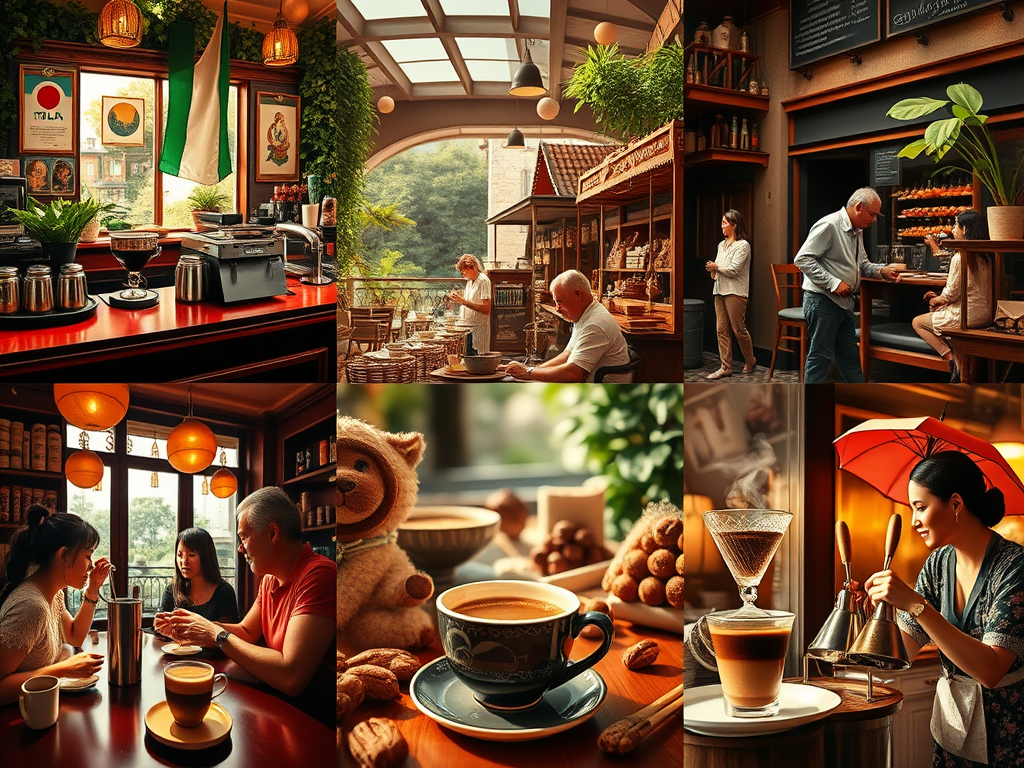
Global coffee culture is vibrant and diverse. It reflects the unique tastes, traditions, and social practices of different regions around the world. Here’s an exploration into how coffee is consumed and celebrated globally:
Europe
Italy
Known for its espresso culture, Italy introduced the world to espresso, cappuccino, and latte. Coffee here is often a quick ritual, standing at a bar counter, especially in the morning.
France
French coffee culture focuses on the cafe experience. People sit for hours, enjoying a café au lait or an espresso. They often pair their coffee with a pastry.
Scandinavia
Scandinavian countries have one of the highest coffee consumption rates per capita. In places like Sweden (fika) and Norway, coffee culture is deeply ingrained. It centers around socializing.
Spain
Here, coffee is social; “café con leche” in the morning, and a “cortado” for an afternoon pick-me-up. The Spanish also enjoy “carajillo,” coffee with liquor, typically after dinner.
Middle East
Turkey
Turkish coffee is a symbol of hospitality, often served with a glass of water and Turkish delight. It’s prepared in a cezve, thick and unfiltered. Appreciating the grounds at the bottom is part of the ritual.
Arab World
In countries like Saudi Arabia or the UAE, coffee (gahwa) is served in traditional settings. It is often accompanied by dates. This combination symbolizes welcome and friendship.
Asia
Japan
Tea is more traditional. Still, coffee has carved its niche with chain cafes like Doutor. It also offers unique coffee experiences in places like Kyoto, where siphon coffee is an art form.
Vietnam
The coffee is known for its strong and sweet flavor. It is often served with condensed milk through a drip filter (phin). This method reflects a combination of French influence and local tastes.
Indonesia
Indonesian culture has origins in coffee production. It features coffee ceremonies, especially in Sumatra and Bali. Kopi luwak (civet coffee) originated in these regions.
Latin America
Brazil
Brazil is the world’s largest coffee producer. It has a strong coffee culture. Offering a “cafézinho” (a small, strong coffee) is a common social gesture.
Colombia
Coffee here is more than a drink. It’s part of the national identity. The “tinto” (a small, black coffee) is a staple.
Mexico
Café de olla showcases how coffee can blend with local flavors. It is made with spices like cinnamon and often piloncillo (unrefined cane sugar).
North America
United States
The U.S. has popularized coffee culture through chains like Starbucks. It promotes a wide variety of coffee drinks, including lattes and mochas. There’s also a growing specialty coffee scene focused on bean origin and brewing techniques.
Canada
Comparable to the U.S. There is a strong presence of Tim Hortons. This reflects a unique Canadian coffee culture centered around “double-doubles” (coffee with two creams and two sugars).
Africa
Ethiopia
Ethiopia is the birthplace of coffee. It has a rich coffee ceremony that can last several hours. This ceremony involves roasting, grinding, and brewing coffee in front of guests.
Kenya
Kenya is famous for its high-quality arabica coffee. The coffee culture in Kenya is less about ceremony. It focuses more on the quality of the brew, which is often enjoyed in social settings.
Oceania
Australia & New Zealand
They are known for their innovative coffee culture. Flat whites and long blacks highlight this culture. There is a strong emphasis on quality, which leads to a thriving cafe scene.
Global Trends
Specialty Coffee
There’s a global shift towards appreciating coffee’s origin, with coffee shops educating consumers about bean types, roasts, and brewing techniques.
Sustainability
Increasing focus on how coffee is grown, with trends towards fair trade, organic, and direct trade practices.
Coffee Shops as Third Places
Coffee places have become social hubs, or “third places” beyond home and work, where people connect, work, or simply relax.
Coffee culture continues to evolve, blending traditional practices with modern innovations, reflecting both local identity and global influences.