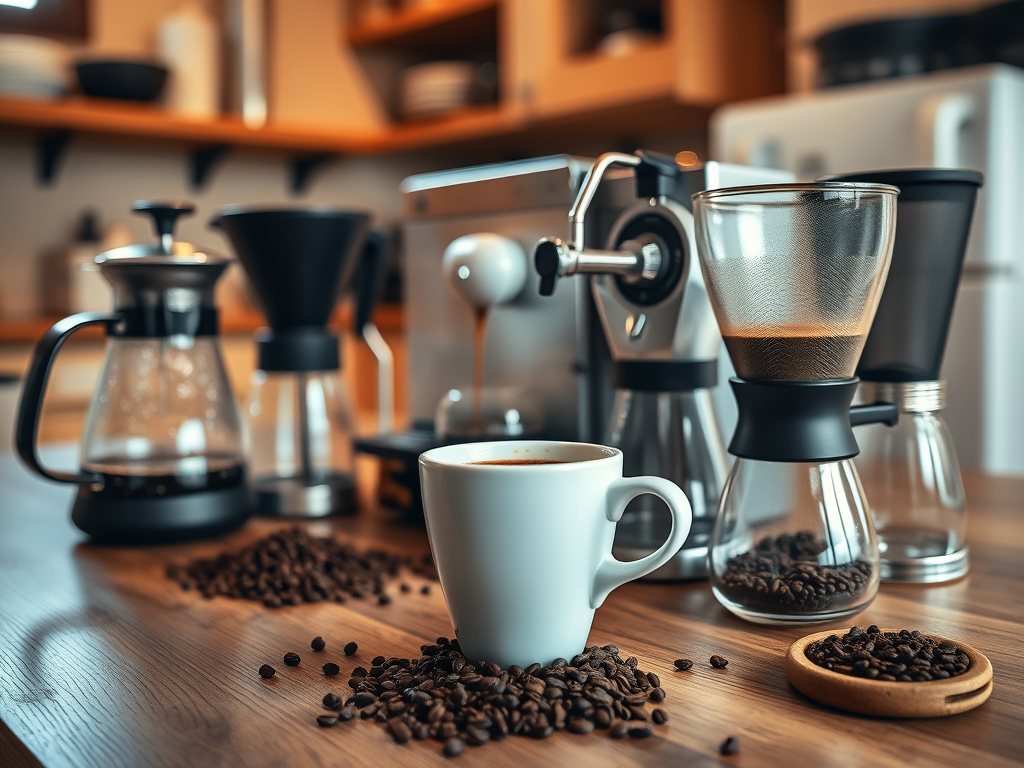

Embark on a journey through the aromatic world of coffee brewing. Whether you’re a morning ritualist or an evening relaxer, the method of brewing can transform your coffee experience. Let’s dive into the art and science behind making the perfect cup
1. Drip Coffee Maker

- Method: Water is heated and poured over ground coffee in a filter, dripping through into a carafe.
- Pros: Convenient, consistent, can brew large quantities.
- Cons: Less control over brewing variables, can result in over-extraction if not cleaned regularly.
My first apartment came with a basic drip coffee maker, and it was my gateway into the daily coffee ritual. It’s straightforward but can surprise you with good coffee when done right.
2. French Press (Press Pot)

- Method: Coffee grounds are steeped in hot water. Then, they are pressed down with a plunger to separate the grounds from the liquid.
- Pros: Rich, full-bodied coffee, lots of control over brewing time and strength.
- Cons: Requires cleanup due to coffee grounds, can be gritty if not pressed correctly.
I remember the first time I used a French Press; it was like discovering coffee anew. The key is letting it steep for about 4 minutes for the best flavor.
3. Pour Over (Manual Drip)

- Method: Hot water is manually poured over coffee in a filter, allowing for a detailed control of the brewing process.
- Pros: Produces a clean, nuanced cup, highly customizable in terms of flavor.
- Cons: Requires more skill, time, and patience.
Mastering the pour-over technique was like learning to paint with coffee. The slow pour, watching the bloom, it’s meditative and rewarding.
4. Espresso

- Method: High-pressure hot water is forced through finely-ground coffee to produce a concentrated shot.
- Pros: Intense flavor, base for many coffee drinks like lattes and cappuccinos.
- Cons: Requires an espresso machine, which can be expensive, and mastering it takes practice.
My barista friend taught me the importance of a good grind and tamp for espresso. It’s not just about the machine but how you prepare the coffee.
5. Aeropress

- Method: A hybrid method uses pressure to push water through coffee grounds. It works like a plunger but with a unique quick-brew process.
- Pros: Extremely versatile, fast, and easy to clean. Produces a smooth, rich coffee.
- Cons: Smaller serving size, less traditional taste for some.
The Aeropress was a game-changer for travel; I could make barista-quality coffee in hotel rooms. It’s like having a mini coffee lab with you.
6. Moka Pot (Stovetop Espresso)

- Method: Water is boiled in the bottom chamber, creating steam that forces water through coffee grounds into the top chamber.
- Pros: Rich, strong coffee without an espresso machine, budget-friendly.
- Cons: Can be tricky to master the perfect brew, risk of over-extraction.
My Italian roommate introduced me to the Moka Pot. The key is low heat to avoid burning the coffee.
7. Cold Brew

- Method: Coffee grounds are steeped in cold water for an extended period (usually 12-24 hours), then filtered.
- Pros: Less acidity, smoother taste, can be made in large batches.
- Cons: Requires foresight since it’s not instant, needs space in the fridge.
Summer in my city led me to cold brew; it’s like drinking a cool, coffee-flavored breeze. Perfect for hot days or when you want coffee without the heat.
8. Siphon (Vacuum Pot)

- Method: Uses vapor pressure and vacuum to brew coffee, involving a fascinating two-chamber process.
- Pros: Theater-like brewing experience, produces a clean, flavorful cup.
- Cons: Complex setup, fragile equipment, not for daily use due to the spectacle involved.
I’ve only used a siphon a few times at a coffee shop. It’s like watching science in action. The taste is uniquely clear and crisp.

Each method has its charm, and exploring them can be a delightful journey into the world of coffee. Remember, the perfect cup is subjective, so don’t hesitate to experiment until you find your preferred method.