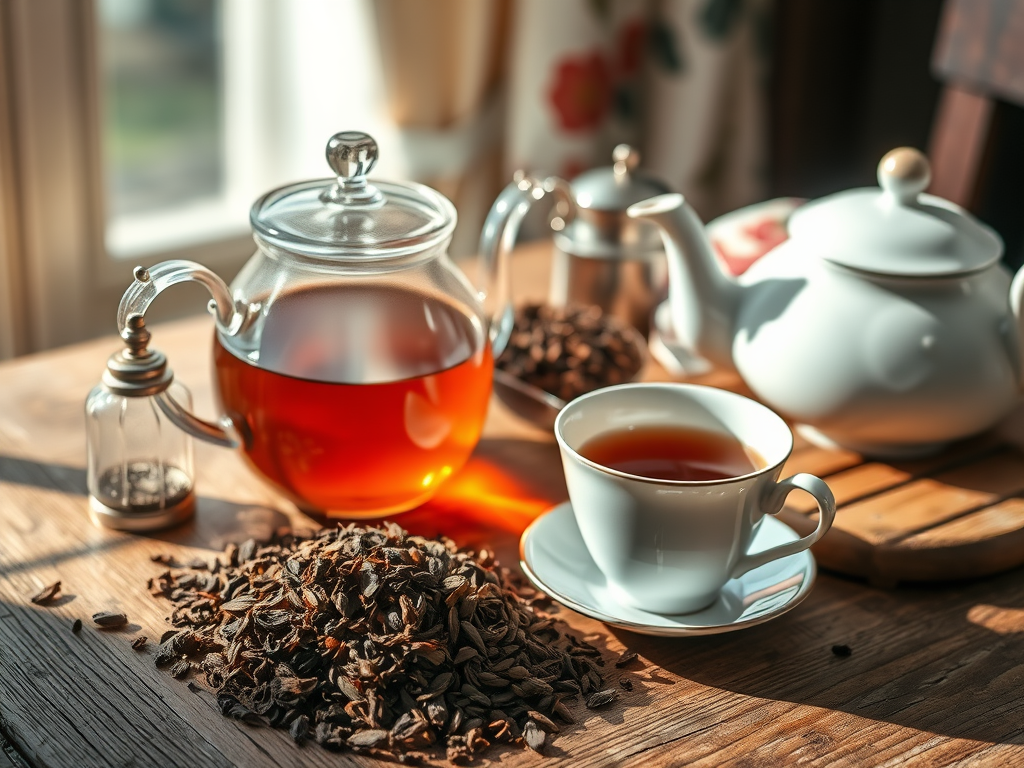


My grandmother always said, Every cup of tea is a story. Now, every time I brew tea, memories come to mind. The comfort it brings and the quiet joy of this simple act are precious. It's not just about taste but about feeling connected to something larger.


Making the perfect cup of tea is both an art and a science.
Here's a step-by-step guide. It will help you achieve tea bliss:

Step 1: Choose Your Tea
Type: Black, green, white, oolong, pu-erh, or herbal. Each has different brewing requirements.
Quality: Opt for whole leaves over dust or fannings for a richer flavor.

Step 2: Measure Your Tea
Loose Tea: Use about 1 teaspoon (2-3 grams) per 8 oz (240 ml) cup for black and oolong. Use less for green tea, about 1 teaspoon for 6-8 oz. Even less is suitable for white tea. Adjust based on taste.
Tea Bags: One tea bag per cup, but you can double up for stronger tea.

Step 3: Prepare the Water
Quality: Tap water is fine if it's good quality. Filtered or spring water can enhance flavor.
Temperature:
Black and Pu-erh: Full boil, 100°C (212°F).
Oolong: Just off the boil, 90-95°C (194-203°F).
Green: 75-80°C (167-176°F) to avoid bitterness.
White: 70-80°C (158-176°F), depending on the type.
Herbal: Boiling, 100°C (212°F) is generally fine.

Step 4: Warm Your Teapot or Cup
Pre-warm your teapot or cup. Pour hot water into it. Swirl the water around and then discard it. This prevents the tea from cooling down too quickly.

Step 5: Steep the Tea
Add the Tea: Put your tea in the strainer or tea infuser. You can also place it directly into the teapot if using loose leaves.
Pour Water: Pour the water over the tea. Start your timer immediately after pouring:
Black: 3-5 minutes.
Oolong: 3-5 minutes, depending on the oxidation level.
Green: 2-3 minutes for most types, some go to 4 minutes.
White: 4-5 minutes for full leaf, shorter for Silver Needle.
Herbal: 5-7 minutes, but check the specific herb as some need less time.
Steeping Technique:
For black and oolong, you want to stir once or twice during steeping to guarantee even extraction.
For green and white, avoid stirring to prevent over-extraction.

Step 6: Check and Adjust Steeping
Taste Test: If possible, taste the tea after the shortest steeping time to adjust. If it's too weak, steep longer; if too strong, reduce future steeping times.

Step 7: Strain and Serve
Remove the tea leaves if using loose leaves. Make sure to remove the strainer. You can also pour the tea through a fine mesh to avoid over-steeping.
Milk and Sweetener:
Milk: For stronger tea, pour your tea into the milk. Add milk to the tea if you prefer a lighter cup. Use room temperature or slightly warmed milk to avoid splitting.
Sweetener: Add sugar, honey, or other sweeteners to taste. If using sugar, stir until dissolved.

Step 8: Enjoy
Temperature: Drink your tea at a comfortable temperature. If it's too hot, let it cool or use a teaspoon to stir and cool it.

Tip:
I've found that pairing tea with food can elevate both. You can pair dark chocolate with strong black tea. Alternatively, try a light scone with Earl Grey. These combinations have turned my tea time into a mini-celebration.

Extra Tips for Perfection:
Multiple Infusions: Many teas, especially green, oolong, and white, can be resteeped. Increase steeping time slightly with each infusion.
Experiment: Keep notes on your brewing sessions to refine your process. Tea strength, water temperature, and steeping time can all be adjusted.
Cleanliness: Clean your tea equipment regularly to avoid flavor contamination from earlier brews.

This approach is detailed. It will help you master the art of tea brewing. You will bring out the best flavors and aromas from your tea leaves.
Discover more from atenajos
Subscribe to get the latest posts sent to your email.

-
Your empathy is not a flaw, but it is the first thing a manipulator looks for. Here is exactly how they turn your kindness into a leash.

-
It starts with small doubts. Then you stop trusting your memory. Then yourself. Here is how to spot gaslighting and take your reality back.

-
Your brain runs on shortcuts, and marketers know every one of them. Here are five psychological biases quietly draining your bank account, and how to catch each before it costs…

-
Most of us are barely better than chance at spotting a liar, because the mouth lies but the body rarely does. Here are the nonverbal signals to watch for, and…
