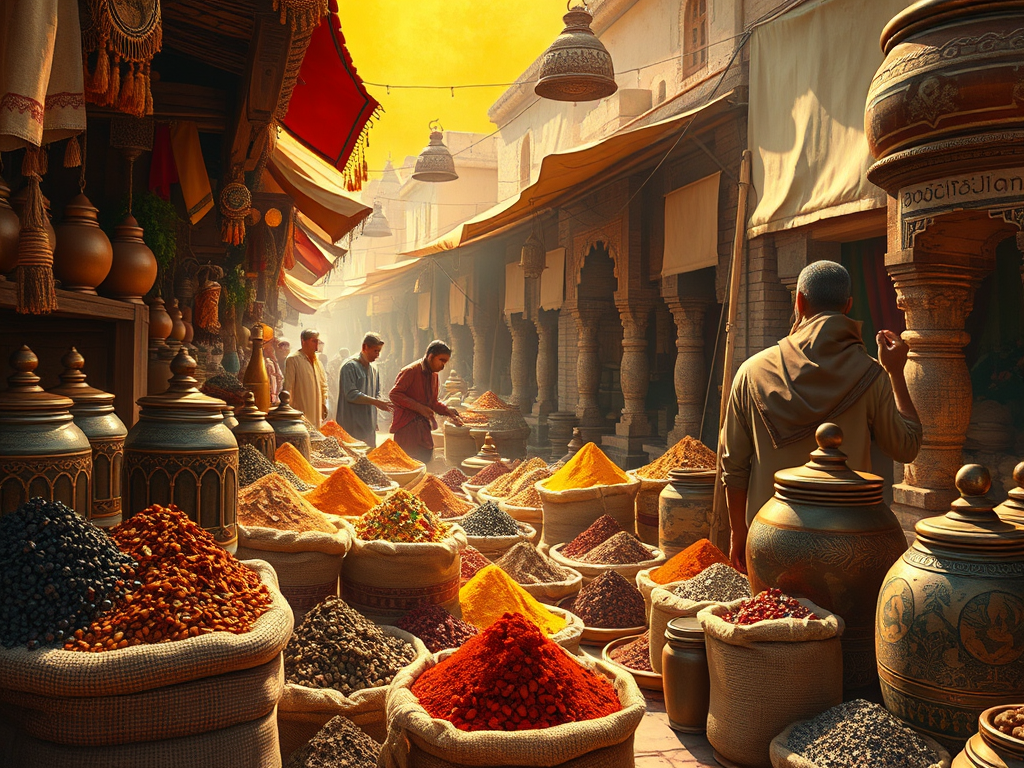
The Dawn of the Spice Trade
The Dawn of the Spice Trade
Spices have been an integral part of human culture. They are valued not merely for their flavors but also for their roles in trade, medicine, and ritual. The story of spices is one of adventure. It is also one of economic power and cultural exchange. Key players like pepper, cinnamon, and nutmeg lead the charge in this narrative.
Pepper – The King of Spices

Origins: Black pepper (Piper nigrum) comes from India’s Malabar Coast. It was valued for its medicinal properties. It was also used as a preservative.
The Trade Route: Pepper was one of the earliest spices to be traded over vast distances. It moved from India through the Middle East and into Europe. This was achieved via the Silk Road and later by sea routes.
Economic Impact: In ancient Rome, pepper was so prized that it was used as currency. The high demand in Europe led to monopolies. Venice was one such monopoly, controlling the spice trade for centuries. They inflated prices so much that pepper was literally worth its weight in gold.
Cinnamon – The Bark of Wealth

Journey from Sri Lanka: Cinnamon, derived from the bark of the Cinnamomum tree, originated in Sri Lanka (Ceylon). Its unique flavor and medicinal properties made it a luxury good.
Cultural Significance: Cinnamon was used in ancient Egypt for embalming. In China, it served medicinal purposes. Its allure spread to the Mediterranean and Europe. There, it was used in both cuisine and religious ceremonies.
Trade and Monopoly: The Portuguese were the first Europeans to reach Sri Lanka in 1505. They gained control over the cinnamon trade. Later, the Dutch and the British contested this control. Each sought to dominate this lucrative market.
Nutmeg & Mace – The Banda Islands’ Treasures

Exclusivity: Nutmeg and its outer coating, mace, come from the Banda Islands in Indonesia. Their rarity and exclusive growth location made them extremely valuable.
The Spice Race: The quest for nutmeg led to fierce competition among European powers. This competition culminated with the Dutch establishing a monopoly. They did this through the Verenigde Oostindische Compagnie (VOC), or Dutch East India Company. They even resorted to destroying trees to control supply.
Culinary Transformation: Nutmeg’s introduction to European cuisine added a new dimension to both sweet and savory dishes. It influenced recipes ranging from pies to stews.
Impact on Global Trade
The Age of Exploration: The European thirst for spices like these three drove the Age of Exploration. Navigators like Vasco da Gama sought direct routes to the spice sources. Their explorations led to the discovery of new trade routes and continents.
Economic and Cultural Exchange: The spice trade facilitated not just the exchange of goods but also ideas, cultures, and technologies. It was a catalyst for globalization, long before the term existed.
Transformation of Cuisines
Fusion of Flavors: Spices from the East transformed Western cuisine, introducing new tastes and techniques of preservation. Pepper became a staple, cinnamon shaped baking, and nutmeg’s versatility spread across dishes.
Culinary Identity: Spices helped define national and regional cuisines. Each culture adapted them in unique ways. This created a legacy of culinary diversity.
Modern Legacy
From Luxury to Everyday: These spices were once luxury items. Now, they are accessible globally. Their historical significance in shaping trade, exploration, and gastronomy remains unparalleled.
Cultural Continuity: Even today, these spices are central to many cuisines. They continue to be used in traditional medicines and rituals. This usage echoes their ancient roles.
The journeys of pepper, cinnamon, and nutmeg from the East to the West are not just tales of trade. They encompass human effort, cultural fusion, and the relentless pursuit of flavor. They are narratives of human effort, cultural fusion, and the relentless pursuit of flavor. These journeys have shaped our world.