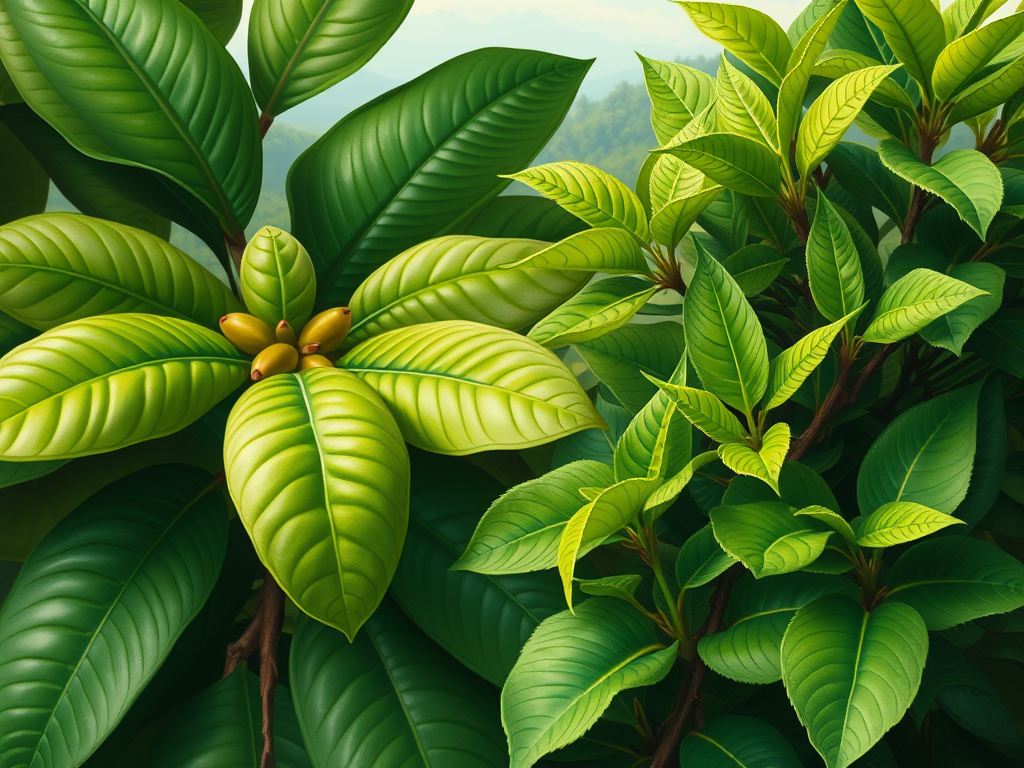
Coffee vs. Tea: A Detailed Comparison
Coffee and tea plants, while both cultivated for beverages, have different botanical origins, growing conditions, and characteristics. Here’s a detailed comparison:
Botanical Information
Coffee
- Scientific Name: Coffea species, primarily Coffea arabica and Coffea robusta.
- Family: Rubiaceae
- Growth: Coffee plants are shrubs or small trees. They can grow up to 15 feet tall in their natural habitat. Yet, they are pruned to about 5-6 feet in cultivation for easier harvesting.
- Leaves: Dark green, glossy, and oval-shaped.
Tea
- Scientific Name: Camellia sinensis
- Family: Theaceae
- Growth: Tea plants can grow into small trees or shrubs. They are typically pruned to around 3-6 feet high for commercial tea production.
- Leaves: Bright green, often serrated, and vary in shape depending on the cultivar but generally lanceolate.
Growing Conditions
Climate
- Coffee: Thrives in tropical climates with consistent rainfall, high humidity, and temperatures between 60°F to 70°F (15°C to 24°C). Altitude is also significant, with Arabica preferring higher altitudes (1,000 to 2,000 meters above sea level).
- Tea: Prefers a more variable climate and requires ample rainfall. It needs well-drained soil and cooler temperatures than coffee. Ideally, the temperature should be between 50°F to 75°F (10°C to 24°C). Tea grows well at altitudes from sea level up to 2,000 meters.
Soil
- Coffee: Needs well-drained, rich soil with a pH between 5.0 and 6.0, often grown on volcanic soils.
- Tea: Prefers acidic to neutral soil (pH 4.5 to 6.5), well-drained but also retains moisture, loamy or sandy.
Sunlight
- Coffee: Requires dappled shade, especially Arabica which does not thrive under full sun. Robusta can tolerate more direct sunlight.
- Tea: Does well with full sun but can also grow under partial shade, particularly in hotter climates.
Cultivation and Harvesting
Coffee
- Harvesting: Coffee cherries are picked when they are bright red. This is for Arabica. They are picked when they turn from green to yellow for Robusta. They can be hand-picked or mechanically harvested.
- Processing: Involves pulping, fermenting, washing, drying, and hulling to get to the green coffee beans.
Tea
- Harvesting: The tips of the tea plant, consisting of the bud and the two youngest leaves, are plucked. This can happen multiple times a year, especially in optimal conditions.
- Processing: After plucking, tea leaves go through processes like withering, rolling, oxidizing, and drying to produce different types of tea (green, black, oolong, etc.).
Cultural and Economic Impact
- Coffee: Has a significant impact on economies in countries like Brazil, Vietnam, Colombia, and Ethiopia. Coffee culture is deeply ingrained in many societies, influencing social habits and daily routines.
- Tea: Major producers include China, India, Kenya, and Sri Lanka. Tea culture varies widely, from the British afternoon tea to Japanese tea ceremonies, affecting both local and global cultural practices.
Health Benefits
- Coffee: Known for its caffeine content and antioxidants. It has the potential to reduce the risk of certain diseases when consumed in moderation. These diseases include Parkinson’s, type 2 diabetes, and liver diseases.
- Tea: Holds less caffeine. It is rich in antioxidants like catechins. This is linked to benefits including improved heart health and lower cancer risk. Green tea is also linked to better weight management.
Environmental Considerations
- Coffee: Can be grown sustainably with shade-grown techniques that also support biodiversity. Nonetheless, monoculture and intensive farming can lead to deforestation and soil degradation.
- Tea: Similar concerns with monoculture, but traditional tea gardens can support biodiversity. Soil erosion and chemical use are challenges in tea cultivation.
In summary, coffee and tea plants share some similar needs for well-drained soils. They both need ample moisture. Nonetheless, they differ significantly in their ideal climate. They also differ in processing techniques and cultural significance worldwide. Both have their unique set of health benefits and environmental impacts, influenced by how they are grown and processed.