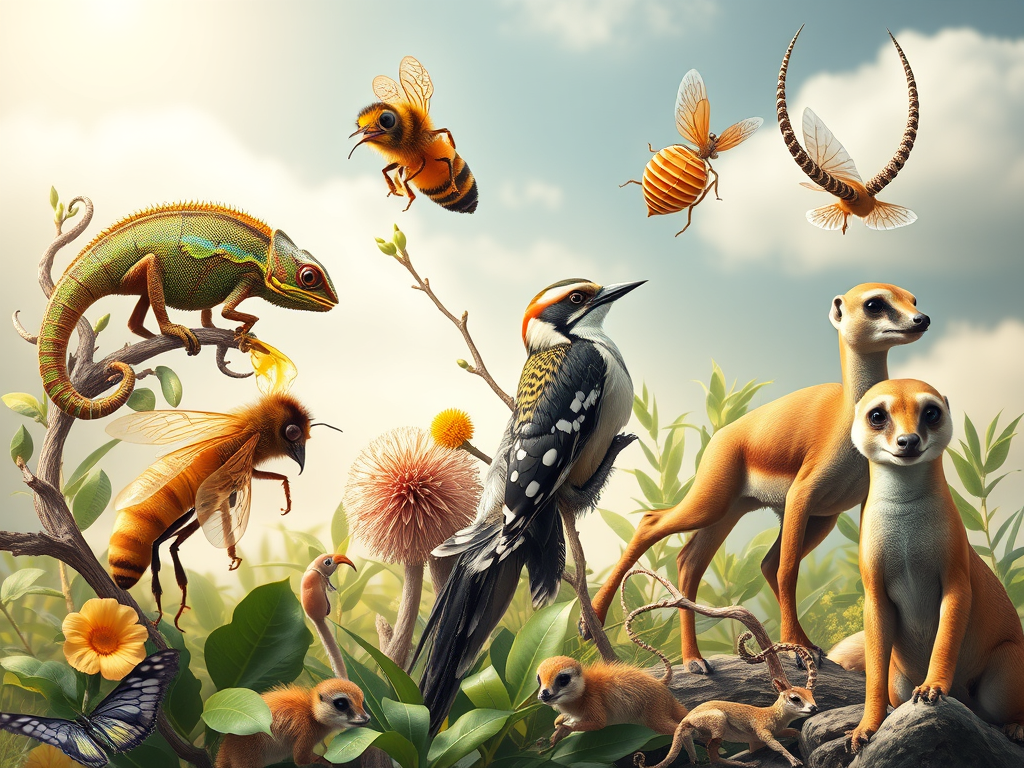
Survival Strategies: Lessons from the Animal Kingdom for Business Success
In the wild and in the boardroom, strategies for survival and success often mirror each other. This happens more than we might think. Here’s a look at seven business strategies, each illustrated by the behaviors of animals:
1. Adaptability – The Chameleon

Strategy: Businesses must adapt to changing environments, markets, and technologies.
Animal Behavior: Chameleons are famous for their ability to change color for camouflage or communication. This adaptability allows them to survive in various habitats. Similarly, businesses that can pivot their strategies or products in response to market changes are more likely to thrive.
2. Teamwork – The Honey Bee

Strategy: Effective collaboration can achieve more than individual effort.
Animal Behavior: Honey bees work in highly organized teams, with each bee having a specific role. Their collective efforts in foraging, hive maintenance, and defense show how teamwork leads to success. This is much like a well-coordinated business team.
3. Persistence – The Woodpecker

Strategy: Consistent effort over time can break through barriers or achieve significant results.
Animal Behavior: Woodpeckers peck relentlessly at wood to find insects or make nests. Their persistence pays off in securing food or shelter. In business, this translates to not giving up on projects or ideas that initially seem tough to crack.
4. Strategic Retreat – The Gazelle

Strategy: Knowing when to step back can be as important as pushing ahead.
Animal Behavior: Gazelles use their speed to escape predators. They also retreat to safer grounds when necessary. In business, this means pulling out of markets that are too saturated. It also involves cutting losses on failing ventures. The goal is to focus on more promising opportunities.
5. Innovation – The Octopus

Strategy: Innovate or perish. Constant innovation keeps businesses relevant.
Animal Behavior: Octopuses are known for their intelligence and ability to innovate, from using tools to solving puzzles. In business, this reflects the need to continuously find new ways to solve problems. Businesses must meet customer needs. Tech companies, for example, innovate with new software or gadgets.
6. Risk Assessment – The Meerkat

Strategy: Evaluate risks before acting, but don’t shy away from taking calculated risks.
Animal Behavior: Meerkats are vigilant, always on the lookout for predators, teaching us about risk assessment. They take risks when foraging but always have a sentinel watching for danger. Businesses need to balance risk with opportunity, assessing the market before major investments.
7. Resilience – The Cockroach

Strategy: The ability to withstand adversity and bounce back is crucial for long-term survival.
Animal Behavior: Cockroaches are survivors, capable of living through conditions that would kill many other species. Their resilience in adapting to almost any environment is significant. It illustrates the importance of endurance in business, especially during economic downturns or when facing competition.
Nature provides some of the best analogies for business strategies. By observing how animals navigate their lives, we can draw parallels to our business practices. We learn from their natural strategies to enhance our own. Whether it’s the adaptability of a chameleon or the resilience of a cockroach, there’s much wisdom in the animal kingdom. This wisdom is available for those willing to look.