Beauty, Longevity and Aging Well
7 Proven Ways to Sleep Better for Healthier Skin
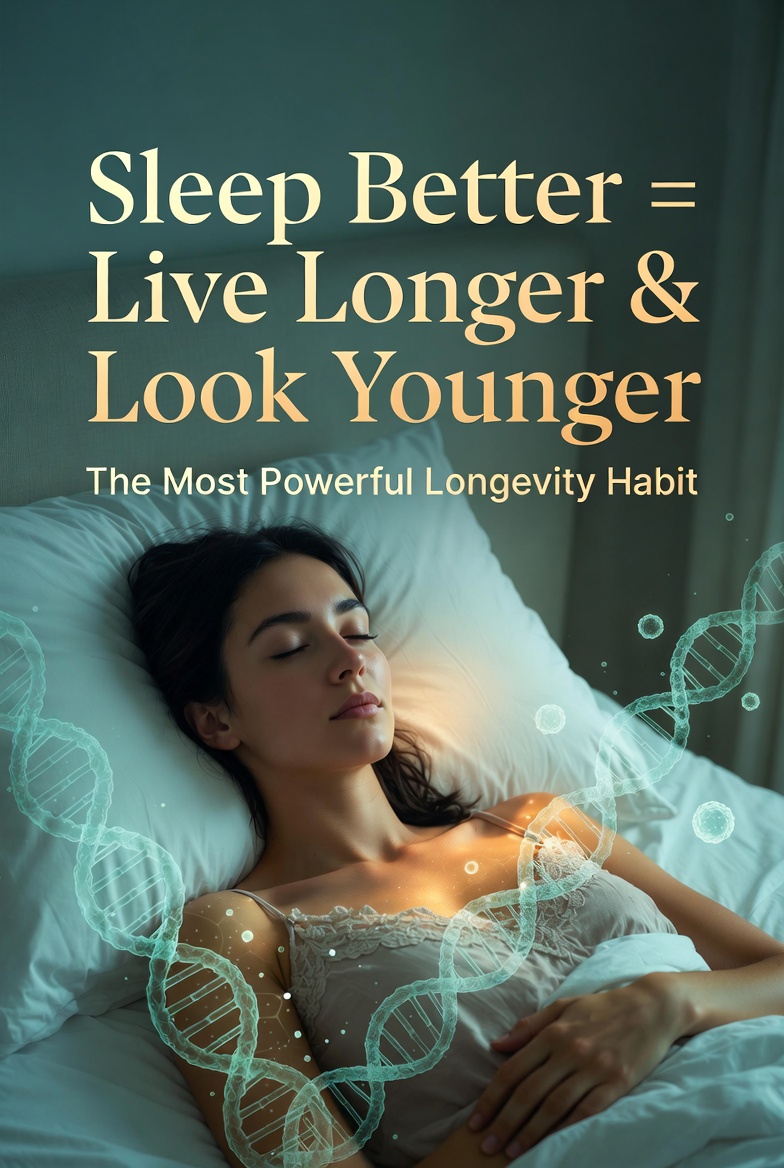
Sleep is the most powerful, completely free beauty treatment. Here is how to get more of it, backed by science.
Poor sleep is one of the fastest ways to accelerate visible aging, and most people are running a chronic deficit without realizing it. Sleep is not passive downtime, it is when the body runs its repair shift, and skin, hair, and hormones all depend on that shift happening on schedule and running the full length.
What Better Sleep Does For Your Skin
- Increases collagen production
- Reduces cortisol, the stress hormone that breaks down collagen
- Lowers inflammation and puffiness
- Improves skin barrier function and hydration
- Supports hair growth and strength
- Boosts overall healthspan and cellular repair
Here are seven science-backed habits that make the biggest difference, in order of impact.
Go to bed and wake up at the same time every day, even on weekends. That steady rhythm is what times your body’s overnight repair work, and collagen production, hormone balance, and cell turnover all run on that schedule.
Try this tonight: Pick one wake-up time and hold it for two weeks, even on weekends. Adjust your bedtime around it, not the other way around.
No screens 60–90 minutes before bed. Try reading, stretching, or a warm shower instead. The blue light and mental stimulation from screens delay melatonin release, so ending the day the same simple way each night helps you fall asleep faster.
Try this tonight: Set a screens-off alarm 90 minutes before bed, then read one chapter or stretch for ten minutes instead.
Cool (16–19°C / 60–67°F), dark, and quiet is the formula. Blackout curtains and a good mattress make a bigger difference than almost any supplement, since deep sleep is far easier to reach when your body isn’t fighting light, noise, or heat.
Try this tonight: Drop the thermostat two degrees and block out streetlight or early sunrise with a blackout curtain.
Recommended Pick
Blackout Curtains
Blocks streetlight and early sunrise so your bedroom stays fully dark through the night.
View on Amazon →Recommended Pick
Cooling Mattress Topper
Helps keep your sleeping temperature in the 16-19°C range that deep sleep favors.
View on Amazon →Avoid heavy meals, caffeine after 2 PM, and alcohol close to bedtime. Alcohol feels sedating but fragments deep sleep later in the night, which is exactly the stage skin repair depends on.
Try this tonight: Move your last coffee to before 2 PM, and swap a nightcap for herbal tea if you drink in the evening.
Get natural light within 30–60 minutes of waking to regulate your circadian rhythm. It is one of the simplest, free interventions with an outsized effect on how well you sleep that night.
Try this tonight: Step outside without sunglasses for 5–10 minutes right after you wake up tomorrow.
Use blue light blockers or night mode in the evening. Screens are hard to avoid entirely, so reducing their impact is the realistic alternative to a full digital sunset.
Try this tonight: Turn on night mode after sunset and keep a pair of blue light glasses by your nightstand for late scrolling.
Recommended Pick
Blue Light Blocking Glasses
An easy way to soften evening screen exposure when a full digital sunset is not realistic.
View on Amazon →Magnesium, glycine, or apigenin can help improve sleep quality once the basics are in place. Supplements work best as a supporting layer, not a replacement for a consistent schedule and a good sleep environment.
Try this tonight: Take magnesium glycinate 30–60 minutes before bed and pair it with your wind-down routine, not your inbox.
Recommended Pick
Magnesium Glycinate Supplement
A calming, well-absorbed magnesium form suited for evening use.
View on Amazon →Common Sleep Mistakes That Age Your Skin
Even good sleepers can undo their beauty sleep with a few habits: scrolling on a bright phone in bed, keeping the bedroom too warm, relying on a nightcap to fall asleep faster, or hitting snooze and cutting the final REM cycle short. Each of these raises cortisol or fragments deep sleep, the exact stage when collagen production and cellular repair happen. If skincare and supplements are not showing results, the hour before lights-out is worth a closer look.
Sample Evening Beauty Sleep Routine
- 🌗8:00 PM — Finish eating & dim the lights
- 🧴9:00 PM — Skincare routine + magnesium
- 📵9:30 PM — No screens, read or journal
- 😴10:00–10:30 PM — Bedtime
Sleep is free, powerful, and one of the highest-ROI habits for both beauty and longevity.
Ready to Wake Up to Better Skin?
Better skin, thicker hair, and a longer healthspan do not have to come from an expensive routine. They start with the seven-plus hours spent asleep tonight. Pick one or two changes from this list and give them two weeks before judging the results.
More Beauty & Longevity TipsRecommended For Your Routine
Amazon affiliate picks that support the habits above.
Frequently asked questions
How does sleep actually affect your skin?
While you sleep, your skin does most of its repair work, rebuilding collagen and clearing the day’s damage. Cut that time short and you get more inflammation, slower healing, and duller skin. The classic tired look, puffy eyes and a grey tone, is your skin showing the repair it missed.
How many hours of sleep do you need for healthy skin?
Most adults do best on seven to nine hours. It is not only the hours though, it is the quality. Deep, unbroken sleep is when the real repair happens, so a solid seven beats a restless nine most nights.
What is the best sleep position for your skin?
On your back. Pressing your face into a pillow night after night creates sleep lines and tugs at the skin over time. If you cannot sleep on your back, a silk or satin pillowcase is a cheap way to cut the friction.
What is the one nighttime habit that hurts skin most?
Going to bed with makeup or the day’s grime still on. It traps oil and bacteria against your skin for eight hours and undoes a lot of the repair sleep is meant to do. A quick cleanse is the highest-value 60 seconds in your routine.
Keep reading
- The Collagen Timeline
- Science-Backed Beauty Foods for Gorgeous Skin
- How Chronic Stress Deteriorates Your Skin