Beauty and Longevity
Your Skin Barrier
Why Your Skin Suddenly Reacts to Everything
Products that used to feel fine now sting. Your face feels tight an hour after washing. Redness that never used to be there. Often the problem is not a new allergy. It is a skin barrier that has been asked to do too much.
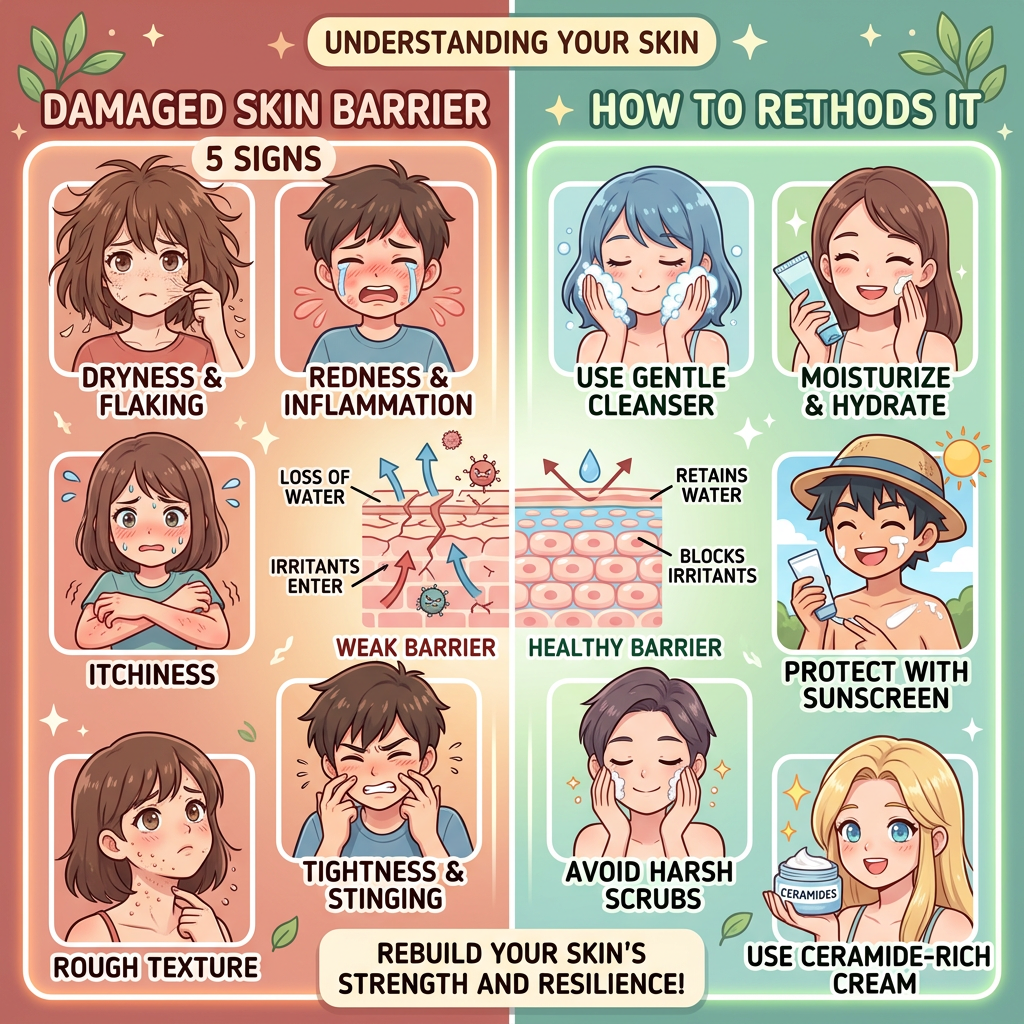
Your skin barrier is the outermost layer of your skin, a thin wall of cells held together by fats such as ceramides. Its job is simple and essential: keep water in and irritants out.
When that wall is healthy, skin looks calm and feels comfortable. When it is damaged, water escapes more easily, irritants get in, and skin can become dry, sensitive, and reactive. The good news is that the barrier repairs itself well when you give it the chance, and that usually means doing less, not more.
How a healthy routine breaks the barrier
The most common cause of barrier damage today is enthusiasm. Layering exfoliating acids, retinoids, vitamin C, and scrubs can strip the protective fats faster than skin can replace them. Harsh foaming cleansers, very hot water, and cold, dry weather add to the load.
Stress and poor sleep may play a part too, which is one more reason the barrier tends to struggle during demanding seasons of life. The pattern to look for is cumulative: no single product is the villain, but together they overwhelm the skin.
Five signs your skin barrier is damaged
A moisturiser or serum you have used for months suddenly burns or tingles on application. The formula has not changed. Your skin is simply letting more of it through than before.
Your face feels tight, almost stretched, shortly after washing. That squeaky clean feeling is often a sign that the cleanser is removing too much of the oil and fat your barrier relies on.
Patches of redness appear that were not there before, often on the cheeks. A compromised barrier lets irritants in more easily, and the skin responds with mild inflammation.
Skin can feel rough and flaky while also breaking out. That combination confuses people into using even stronger treatments, which can make the barrier worse.
Makeup sits badly, sunscreen stings, and skin seems irritated no matter what you apply. That general reactivity is one of the clearest signals that the barrier needs a rest.
Your skin barrier does not need more products. It needs fewer, gentler ones and enough time to rebuild.
How to repair your skin barrier
Strip your routine back to the essentials for a few weeks: a gentle, non foaming cleanser, a simple moisturiser, and sunscreen in the morning. Pause exfoliating acids, scrubs, and retinoids until your skin feels calm again, then reintroduce them slowly, one at a time.
Look for barrier friendly ingredients such as ceramides, glycerin, and hyaluronic acid, and consider a thin layer of a petrolatum based ointment at night on very dry areas. Use lukewarm rather than hot water, pat skin dry, and be patient. Many people notice improvement within a couple of weeks, but full recovery can take longer. If your skin is very painful, swollen, or not improving, see a dermatologist, since conditions like eczema or rosacea can look similar and need proper treatment.
What to use for the reset
A barrier reset only needs a few gentle basics. These are widely available, fragrance free staples.Books that go deeper
🧴Recommended Read
The Skincare Bible
Dr Anjali Mahto
A consultant dermatologist cuts through skincare marketing with clear, evidence based advice, including how to avoid overdoing active ingredients.
View on Amazon →Recommended Read
The Beauty of Dirty Skin
Dr Whitney Bowe
A dermatologist explores the link between gut, stress, and skin, and why stripping your skin can backfire.
View on Amazon →Recommended Read
Skin Cleanse
Adina Grigore
A practical, simplify everything approach to skincare that pairs well with a barrier reset.
View on Amazon →Some links above are affiliate links. If you buy through them we may earn a small commission, at no extra cost to you.
Frequently asked questions
What is the skin barrier?
The skin barrier is the outermost layer of your skin, made of skin cells held together by fats such as ceramides. It keeps water in and irritants out. When it is damaged, skin can become dry, sensitive, red, or reactive.
How long does it take to repair a damaged skin barrier?
Many people notice improvement within a couple of weeks of simplifying their routine, but full recovery can take longer depending on how damaged the skin is. Consistency and patience matter more than any single product.
Should I stop using retinol if my skin barrier is damaged?
Usually it helps to pause retinoids and exfoliating acids until your skin feels calm, then reintroduce them slowly, a few times a week at first. If a retinoid was prescribed by a doctor, check with them before changing how you use it.
When should I see a dermatologist?
See a dermatologist if your skin is painful, swollen, cracked, or not improving after a few weeks of a gentle routine. Conditions such as eczema, rosacea, or allergic reactions can look like barrier damage and need proper diagnosis.
This article is for general information and is not a substitute for advice from a dermatologist or doctor.