The Origins of Luck: A Cultural Journey
Lucky charms aren’t just whimsical trinkets. They’re vibrant souvenirs from humanity’s exhilarating ride through history. These items are stamped with the essence of our diverse cultures. The powerful icons of good fortune carry stories that run deep. They span from the enchanting emerald fields of Ireland to the bustling shops of Japan. Let’s embark on this thrilling journey around the globe. We will uncover the rich origins of our favorite luck-bringers. Fate has a passport, and it’s time to explore!


Four-Leaf Clover: Ireland’s Green Magic
Origin: Celtic Ireland, long before St. Patrick’s Day became a beer-fueled celebration.
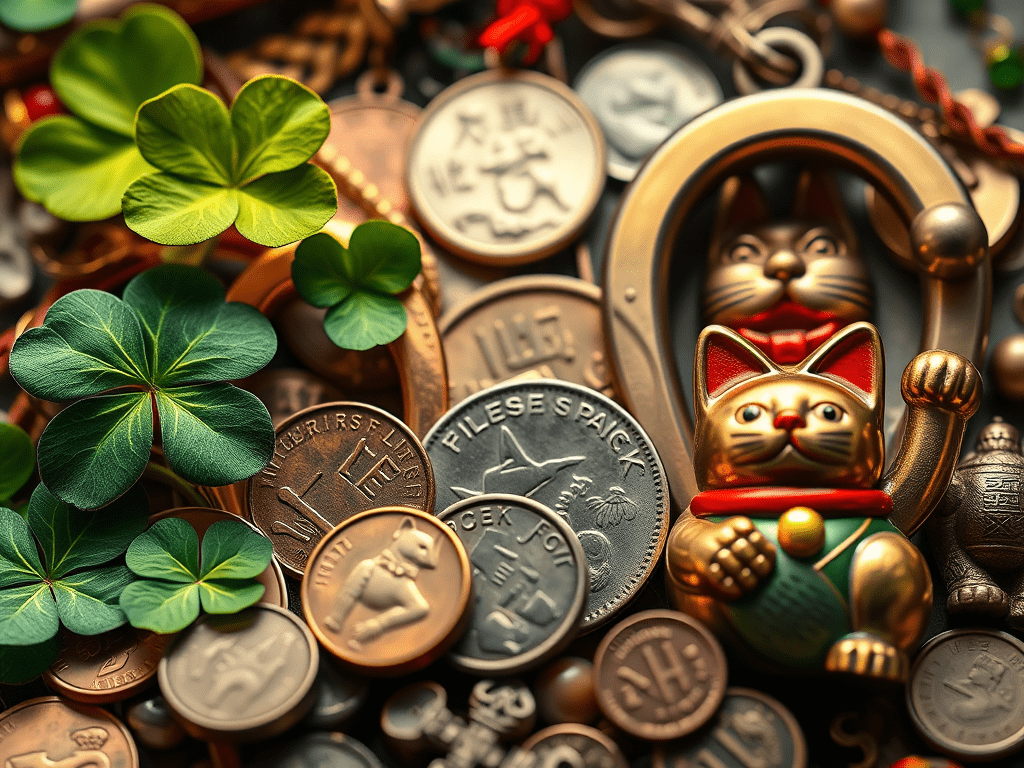
Cultural Root: Druids revered the rare four-leaf clover as a formidable shield against evil spirits—three leaves were divine, but four? That was pure next-level magic! Later, Christians wove it into a tapestry of faith, hope, love, and luck. This charming emblem is Ireland’s emerald flex, born from misty hills and a keen eye for spotting the improbable.
Rabbit’s Foot: African-American Hoodoo Vibes
Origin: West African traditions, beautifully remixed in the American South.
Cultural Root: Enslaved Africans carried a mighty spiritual strength. Rabbits were seen as kings of fertility. Their left hind foot, gathered under a full moon, possessed raw power. Hoodoo practitioners transformed it into a treasured luck charm; it hopped into the heart of mainstream U.S. culture through rich folklore and unwavering grit. It’s a remarkable blend of history—dark yet fluffy, embodying resilience.
Lucky Penny: Old England’s Coin Craze
Origin: Medieval Britain, where every little scrap was a treasure.
Cultural Root: The famous rhyme “See a penny, pick it up” hails from a time when coins were scarce. Finding one felt like the universe nudging you with a wink! The heads-up meant divine favor was showering down; meanwhile, the tails side got the cold shoulder. It’s the essence of a peasant’s hope transformed into a timeless luck ritual.
Horseshoe: Medieval Europe’s Iron Luck
Origin: Western Europe, during the blacksmiths’ golden age.
Cultural Root: Blacksmiths were part magician, part muscle—horseshoes encapsulated their mystique. Christian lore credits St. Dunstan for nailing one to the devil’s hoof, thus cementing its reputation as a guardian against misfortune. Hung above doors across England and beyond, the horseshoe is a medieval “keep out” sign. It wards off bad vibes and negativity!
Maneki-Neko: Japan’s Edo-Era Cash Cat
Origin: 17th-century Japan, in the bustling heart of merchant towns.
Cultural Root: This captivating waving kitty was born in the Edo period. Its paw is raised, beckoning toward prosperity. It originated from a tale of a cat saving a lord from thunderous lightning. Merchants eagerly adopted it to attract wealth and foot traffic. It’s the perfect blend of Shinto practicality and feline charm, now serving as Japan’s beloved luck ambassador around the globe!
Wishbone: Etruscan Italy’s Bone Games
Origin: Ancient Etruria (pre-Rome Italy), dating back to 700 BCE.
Cultural Root: The Etruscans dried bird wishbones to divine the future—crack it, interpret it! Romans adopted this enchanting practice, transforming it into a wish-making celebration many cherished by medieval Europe. It made its way to America with the pilgrims and has now become a quintessential staple of Thanksgiving festivities. An ancient oracle turned into modern revelry!
Lucky Number 7: Middle East to Everywhere
Origin: Ancient Mesopotamia, the cradle of civilization.
Cultural Root: The seven planets in the sky bestowed it with cosmic significance. Hebrew texts celebrated it for the seven days of creation. Babylonian mathematics praised its prime status. It traversed west—captivating Greece, Rome, and Vegas—and east as well. A global digit of luck, steeped in ancient grandeur!
These charms aren’t merely adorable—they are cultural time capsules bustling with vibrant histories, from Druid whispers to Edo-era creativity. Luck’s a universal desire, scratched in wildly inventive ways across time and space. Which origin captivates your imagination? Personally, I’m enchanted by the wishbone’s ancient glow-up—share your favorite below!