Money and Mind
Money Avoidance
Why You Don’t Check Your Bank Balance
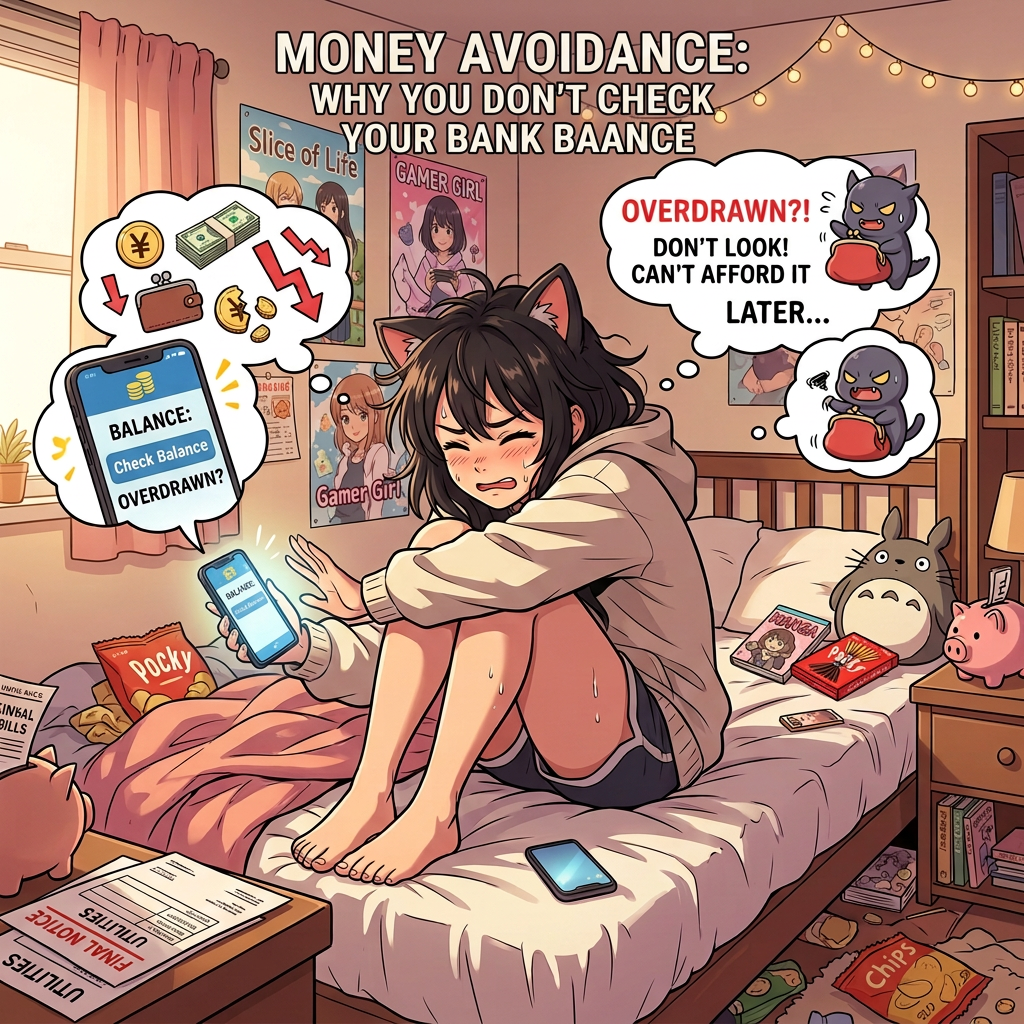
The unopened letter on the counter. The banking app you only open when you have to. The quiet dread before you look. Money avoidance is common, and it is rarely about maths. It is about a feeling you would rather not have.
If you put off checking your account, you are far from alone. Researchers even have a name for it: the ostrich effect, our tendency to avoid information we expect to be unpleasant, even when knowing would help us.
The trouble is that avoided money problems tend to grow quietly. Late fees, forgotten charges, and missed opportunities all thrive in the dark. The goal is not to become obsessed with money. It is to make looking at it feel safe enough to do regularly.
Where money avoidance comes from
Financial psychologists Brad and Ted Klontz describe “money scripts”, beliefs about money we pick up in childhood that quietly shape how we behave as adults. One of these is money avoidance: the sense that money is stressful, shameful, or somehow not for people like us.
Money avoidance often grows out of past experiences: a family that fought about money, a period of real hardship, or simply never being taught the basics. Checking the balance is not neutral for these people. It brings back an old feeling, and avoidance is the brain’s attempt to protect you from it.
Five signs of money avoidance
You know roughly what is in your account, but you would rather not see the exact number. Checking is something you do only when you have to, like before a large purchase or after a declined card.
Bills, statements, and anything from the tax office pile up unopened. Out of sight feels like out of mind, at least until a reminder or a late fee forces the issue.
Talking about money with a partner, family, or even a financial professional feels uncomfortable, so you change the subject or keep it vague. Decisions get postponed rather than made.
Ironically, financial anxiety can lead to spending. A purchase offers brief relief from the uncomfortable feeling, even though it adds to the underlying problem.
This label feels like an explanation, but it is really a reason not to engage. Skills with money are learned, and most people who think they are bad with it simply never had a safe way to learn.
Looking at your money does not make the situation worse. It is the only thing that gives you the power to make it better.
How to face your finances calmly
Start small and make it routine. Set a ten minute “money date” once a week, at the same time, ideally with a cup of tea and something pleasant afterwards. Just look. No judging, no fixing, only noticing. Familiarity is what takes the fear out of it.
Then reduce the number of decisions. Automate bills and savings where you can, set up balance alerts so information comes to you in small doses, and open mail as it arrives rather than letting it pile up. If debt or anxiety feels overwhelming, a free debt advice service or a counsellor who works with financial stress can help you make a plan without shame.
Make it easier to look
Simple tools that make your weekly money check in feel less daunting.Books that go deeper
🧠Recommended Read
Mind over Money
Brad Klontz and Ted Klontz
The financial psychologists behind the “money scripts” idea explain how childhood beliefs about money shape our adult habits, and how to change them.
View on Amazon →Recommended Read
The Psychology of Money
Morgan Housel
Short, wise chapters on why money is more about behaviour than knowledge. A gentle read for anyone who feels intimidated by finance.
View on Amazon →Recommended Read
I Will Teach You to Be Rich
Ramit Sethi
A practical, automation first system for people who want their money handled without having to think about it every day.
View on Amazon →Some links above are affiliate links. If you buy through them we may earn a small commission, at no extra cost to you.
Frequently asked questions
What is money avoidance?
Money avoidance is a pattern of avoiding financial information and decisions, such as not checking your balance, leaving bills unopened, or steering away from money conversations. It is usually driven by anxiety or uncomfortable beliefs about money, not by a lack of ability.
What is the ostrich effect?
The ostrich effect is the tendency to avoid information we expect to be unpleasant, even when knowing it would help us. In finance, it shows up as people checking their accounts less often when they fear bad news.
How do I stop avoiding my finances?
Make looking at money small, regular, and low pressure. A short weekly check in, automated bills, and balance alerts all help. Over time, familiarity reduces the anxiety that drives avoidance.
When should I get help with financial anxiety?
If money worries are affecting your sleep, relationships, or daily life, or if debt feels unmanageable, it is worth reaching out to a free debt advice service, a financial counsellor, or a mental health professional.
This article is educational and is not financial advice.