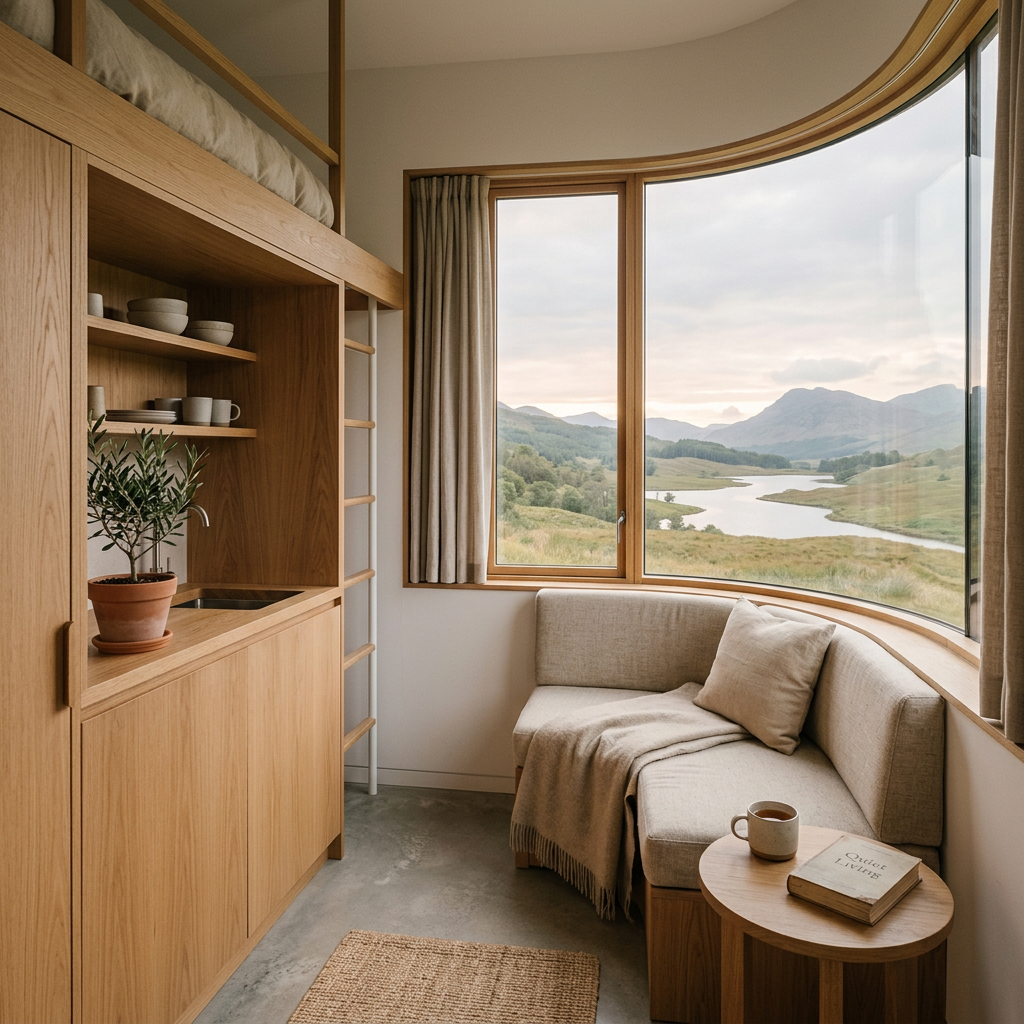
Sustainable Living and Conscious Home
The Capsule Home: How Owning Less Creates More Peace
The capsule home is not about deprivation. It is about intention. Here is how to build one room by room and why it changes how your everyday life feels.
The fashion world gave us the capsule wardrobe: a small, curated collection of versatile pieces that work together, last, and remove the daily anxiety of having nothing to wear despite a full wardrobe. The principle applies to every room in your home. And the benefits go far beyond aesthetics.
A capsule home is intentional living made physical. It reduces the cognitive load of managing possessions, lowers your environmental footprint, saves money, and consistently produces an environment that supports calm rather than visual noise.
The core principle: everything earns its place
The capsule home is built on one question applied to every object in every space. That question is not “do I like this?” or “might I need this someday?” It is this: does this object earn its space through regular use, genuine meaning, or real beauty? If the honest answer is no, the object belongs somewhere else.
This sounds ruthless. In practice, it produces homes that feel expansive, calm, and deeply personal, because everything in them has been deliberately chosen rather than passively accumulated.
Room by room: where to start
The living room is the most visually impactful space in most homes and the easiest to declutter for immediate results. Begin with every surface. Remove everything and only return the items that genuinely add meaning or beauty. A surface with three thoughtfully chosen objects reads as intentional. A surface with twelve objects reads as neglected regardless of what those objects are.
Books, art, and a few meaningful objects are the ingredients of a calm living room. Cables, duplicate remotes, accumulated decorative impulse purchases, and objects without homes are the ingredients of visual noise.
The kitchen is where the gap between what we own and what we actually use is usually largest. Most people use roughly 20% of their kitchen equipment 80% of the time. The rest occupies drawer and cupboard space, requires cleaning, and creates the friction of having to move twelve things to reach the one thing you actually need.
A capsule kitchen is built around real cooking habits, not aspirational ones. The pasta machine used twice stays. The spiraliser used once three years ago belongs in a charity shop.
“Clutter is deferred decisions. A clear space is a space where decisions have been made and acted on. That clarity is contagious.”
Sleep quality is directly connected to the visual and environmental calm of the bedroom. Research consistently finds that people sleep better in less cluttered, cooler, darker rooms. The bedroom is the room where a capsule approach pays the most direct physiological dividend.
The capsule bedroom has a bed, bedside tables, adequate storage, and nothing more unless each additional piece clearly earns its presence. No exercise equipment, no work materials, no boxes waiting to be dealt with. The bedroom is a sleep environment before it is a storage space.
The capsule home and sustainable living are deeply aligned because owning less means buying less, replacing less, and sending less to landfill. Choosing fewer, higher-quality items that are built to last is both more sustainable and more beautiful than the constant churn of fast home goods.
When you do need to replace something, the capsule framework naturally tilts toward secondhand first, then durable new, rather than convenient cheap. This shift alone significantly reduces the environmental impact of running a home.
Recommended Read
The Life-Changing Magic of Tidying Up
Marie Kondo
The foundational book on intentional decluttering. Kondo’s KonMari method is the most widely practised system for building a capsule home and has been applied by millions of people worldwide with documented wellbeing benefits.
View on Amazon →Recommended Read
The Year of Less
Cait Flanders
A memoir of intentional minimalism that covers the emotional and psychological dimensions of choosing to own and consume less. Honest, warm, and far more interesting than a how-to guide.
View on Amazon →📚 Full Reading List
All books from this post.
Which room would you start with?
Drop a comment. And tell me honestly: is there a room in your home right now that you avoid because of how it makes you feel?
Keep reading
Sustainable Living
The Psychology of Why Going Zero Waste Is So Hard
Read post →Money and Mind
Financial Abuse: The Form of Control Nobody Talks About
Read post →Food as Medicine
The Anti-Inflammatory Grocery List: What to Buy Every Week
Read post →Beauty and Longevity
What Chronic Stress Is Actually Doing to Your Skin
Read post →Frequently asked questions
What is a capsule home?
It is the idea of owning fewer things, but making sure each one earns its place. Like a capsule wardrobe, the goal is not empty rooms, it is keeping what is genuinely useful or loved and letting the rest go, so your space feels calmer.
How do I start owning less without getting overwhelmed?
Start with one room, or even one drawer, rather than the whole house. Ask of each item whether you actually use it or truly love it. If it is neither, it is just taking up space and attention. Small wins build the momentum to keep going.
Does owning less really make you happier?
For a lot of people, yes, because less stuff means less to clean, tidy, and think about. It is not about deprivation. It is about clearing the clutter that quietly drains you so there is more room for what matters.
What is the difference between minimalism and a capsule home?
Minimalism can sound like bare white rooms and strict rules. A capsule home is gentler and more practical. It is not about hitting a magic number of possessions, it is about being intentional so your home works for your actual life.
Keep reading
- Why Going Zero Waste Is So Hard
- 15 Budget-Friendly Apartment Decor Ideas
- Why Retail Therapy Does Not Work