Sustainable Living & Conscious Home
The Psychology of Why Going Zero Waste Is So Hard
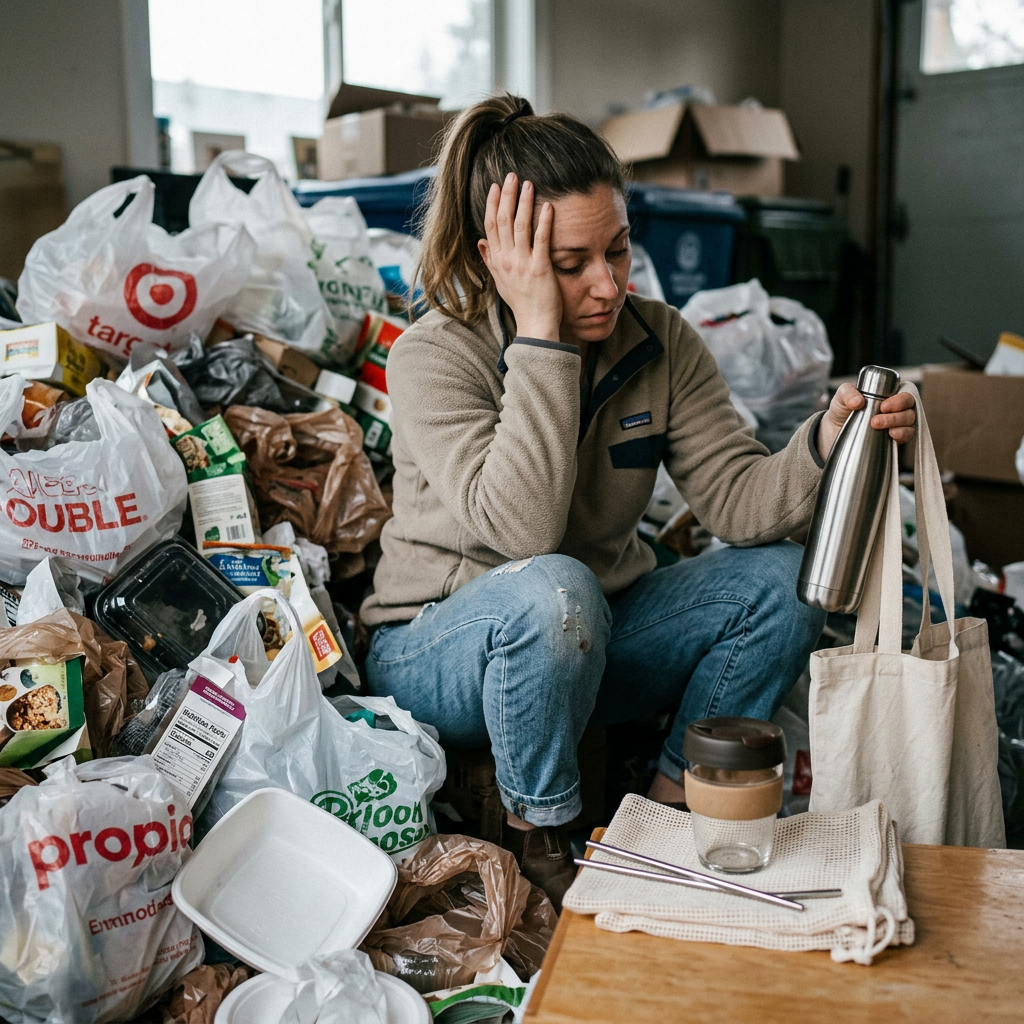
You know better. You want to change. So why does the plastic keep ending up in your trolley? The answer is not willpower.
Most sustainability content tells you what to do: buy the bamboo toothbrush, say no to the straw, bring the tote bag. And yet millions of people who genuinely care about the planet still find themselves reaching for the plastic-wrapped ready meal at 7pm on a Tuesday.
This is not hypocrisy. It is neuroscience. Behaviour change is not driven by information. It is driven by habit architecture, identity, social norms, and cognitive load, none of which get addressed when someone tells you to “just swap to reusables.”
Behavioural science has spent decades studying the gap between what people say they value and what they actually do. Applied to sustainable living, the findings are both illuminating and immediately practical. The barriers to zero-waste living are not moral failures. They are predictable psychological patterns, and once you can see them, you can design around them.
In this article
The 5 real barriers, and how to dismantle each one
📖Recommended Read
Atomic Habits
James Clear
The most practical book on identity-based habit change available. Clear’s system for making sustainable behaviours small, obvious, and identity-aligned is directly applicable to zero-waste living, and better than anything written specifically about sustainability.
View on Amazon →“The person who makes one sustainable swap and keeps it forever has done more than the person who attempts ten and abandons them all.”
Recommended Read
Nudge
Thaler & Sunstein
The Nobel Prize-winning book on how environment design drives behaviour. Directly applicable to setting up your home and shopping habits so sustainable choices become the easy default rather than the effortful override.
View on Amazon →Recommended Read
The Year of Less
Cait Flanders
A memoir of intentional consumption that bridges sustainable living and the psychological relationship with buying. Honest, warm, and one of the most readable books in the conscious-living space.
View on Amazon →📚 Full Reading List
All books from this post.
A lot of this comes down to how habits and guilt actually work, the same theme behind choosing a smaller, more intentional life and eating more consciously with an anti-inflammatory grocery list.
Frequently asked questions
Why is going zero waste so hard?
Because the system is built against it. Most products come wrapped in plastic, low waste options cost more or take more time, and no amount of personal effort changes that on its own.
Is zero waste actually possible?
True zero is nearly impossible for most people. A more useful goal is low waste, cutting what you can without the guilt that makes people give up entirely.
Why do I feel guilty about my waste?
Because a lot of the responsibility has been shifted onto individuals, when most waste is created upstream by companies and packaging. Some of that guilt is not yours to carry.
How do I start reducing waste without burning out?
Pick one or two swaps you will actually keep, like a reusable bottle or refills you already pass on your way home. Small and steady beats ambitious and abandoned.
Which barrier resonates most with you?
Drop the number in the comments. Which one has been quietly sabotaging your best intentions?
Keep reading
Psychology
The Fawn Response: Why Some People Appease Instead of Fight or Flee
Read post →Money & Mind
5 Psychological Biases That Make You Waste Money
Read post →Beauty & Longevity
What Chronic Stress Is Actually Doing to Your Skin
Read post →Psychology
How Manipulators Use Your Own Kindness Against You
Read post →