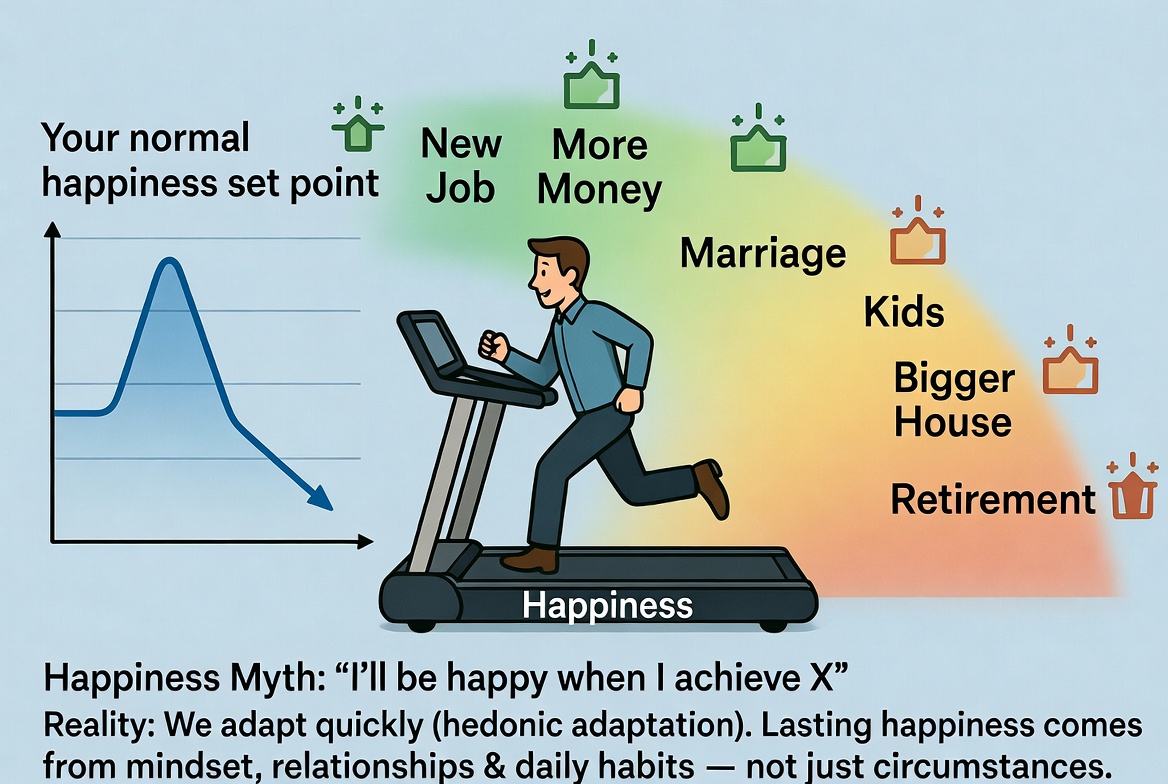
One of the most common misconceptions is that happiness is a permanent destination you reach by changing your external circumstances—the classic “I’ll be happy when…” trap.
People often believe that once they hit certain milestones (a promotion, more money, marriage, kids, a bigger house, retirement, etc.), they’ll finally arrive at lasting happiness. The logic feels intuitive: better circumstances = better feelings.
Why this is a misconception
Research in positive psychology shows this rarely works out that way due to hedonic adaptation (also called the hedonic treadmill). We quickly get used to positive changes, take them for granted, and our happiness level drifts back toward our baseline. The boost from big life events is usually smaller and shorter-lived than we expect.
For example:
- Marriage often gives a happiness bump, but studies show it typically fades after about two years on average.
- Lottery winners and people who achieve major financial gains report temporary spikes followed by a return to roughly their prior happiness levels.
- The same adaptation happens with negative events—people are often more resilient than they fear (though severe, ongoing hardships like certain disabilities or late-life bereavement can have longer effects).
Sonja Lyubomirsky and other researchers break happiness into roughly:
- ~50% genetic/set point
- ~10% circumstances
- ~40% intentional activities and mindset
That 40% is where real leverage lies—daily habits, relationships, gratitude, purpose, and how we interpret events.
Related misconceptions that compound the problem
- “I should feel happy (or at least positive) all the time.” Emotions naturally fluctuate. Expecting constant bliss sets you up for disappointment and can lead to “toxic positivity,” where normal sadness, frustration, or grief gets pathologized. A fulfilling life includes the full emotional range; challenges often fuel growth, meaning, and deeper appreciation. medium.com
- Happiness is mostly about pleasure or getting what you want. Pleasure is fleeting. Sustainable well-being (what Aristotle called eudaimonia—flourishing) comes more from meaning, strong relationships, contribution, and living in line with your values.
The better approach
Happiness is less a fixed state you find and more something you cultivate through how you live day to day. Strong relationships consistently rank as one of the strongest predictors of well-being across studies.
Small, repeatable practices—expressing gratitude, nurturing connections, pursuing meaningful goals, practicing kindness—tend to move the needle more reliably than chasing the next big external win.
The pursuit itself can be part of the joy (“the happiness of pursuit”), but directly obsessing over “being happy” can sometimes backfire by raising expectations too high.
In short: Stop waiting for the perfect set of circumstances. Focus on the parts you can influence—your mindset, habits, and connections—and happiness becomes more of a byproduct than a destination.