Beauty, Longevity and Ageing Well
The Collagen Timeline: What Happens to Your Skin Each Decade
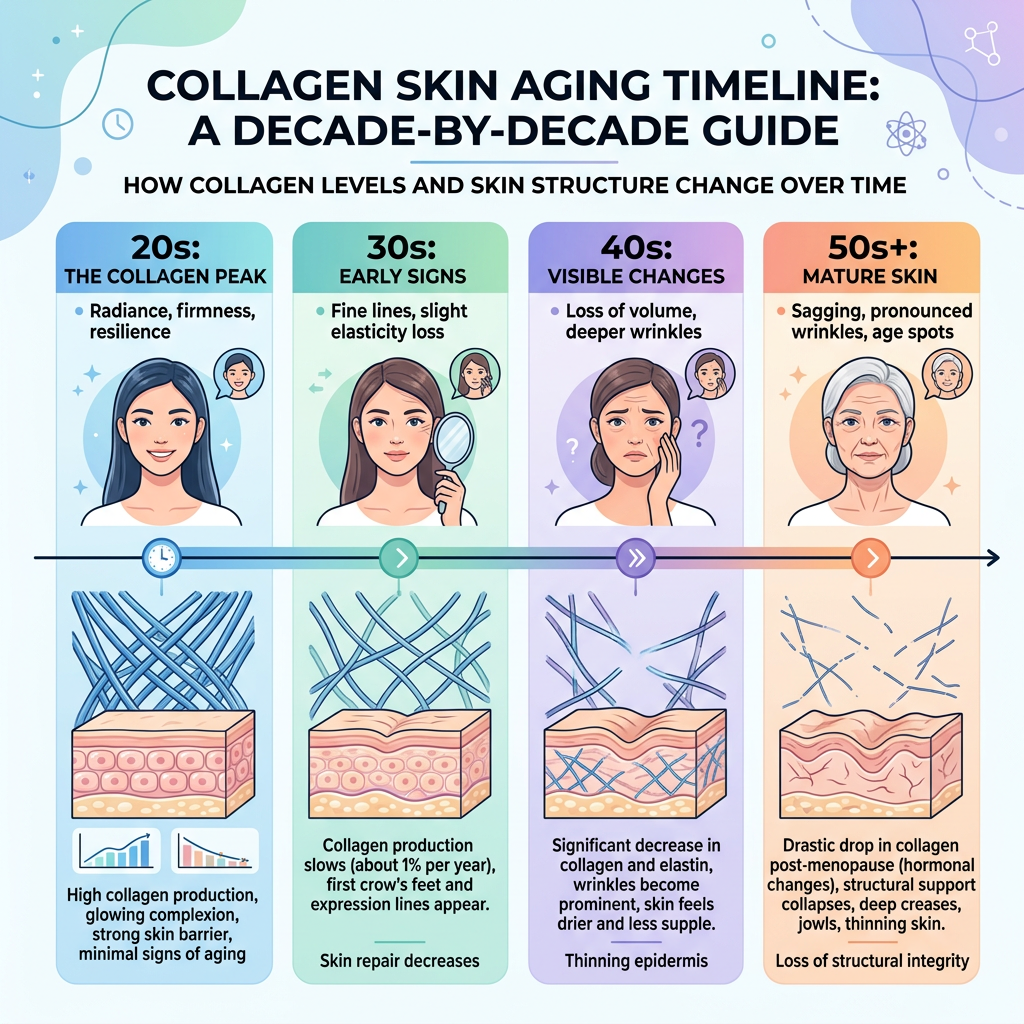
Your body starts losing collagen at 25. At menopause it falls off a cliff. Here is what is actually happening, decade by decade, and what the science says helps.
Disclosure: atenajos.blog participates in the Amazon Associates Program. As an Amazon Associate I earn from qualifying purchases made through links on this page, at no extra cost to you. Product links point to category searches so you can compare options.
Collagen is the most abundant protein in the human body and the structural foundation of skin firmness, elasticity, and plumpness. It is also, unfortunately, something your body produces progressively less of with every passing year from your mid-twenties onwards.
Understanding exactly what happens at each stage, and which interventions are actually supported by evidence, is far more useful than the marketing language that surrounds most anti-ageing products. Here is the honest timeline.

The decade by decade breakdown
“Most anti-ageing marketing sells hope. A small number of interventions sell evidence. Knowing the difference is the whole skill.”
Recommended Read
The Menopause Brain
Lisa Mosconi PhD
The leading neuroscientist on menopause explains oestrogen’s role in skin, brain, and body ageing with extraordinary clarity. Essential reading for understanding the hormonal dimension of the collagen timeline.
View on Amazon →Recommended Read
Why We Sleep
Matthew Walker PhD
Sleep is when collagen synthesis peaks and skin repair occurs. Walker’s book makes the strongest possible case for sleep as the foundational anti-ageing intervention.
View on Amazon →📚 Full Reading List
All books from this post.
Which decade are you in right now?
Drop a comment and tell me which intervention from your decade you are going to start with. I read every one.
References
Key sources behind the claims in this article.
- Proksch E, Segger D, Degwert J, Schunck M, Zague V, Oesser S. Oral supplementation of specific collagen peptides has beneficial effects on human skin physiology: a double-blind, placebo-controlled study. Skin Pharmacol Physiol. 2014;27(1):47 to 55.
- Proksch E, Schunck M, Zague V, Segger D, Degwert J, Oesser S. Oral intake of specific bioactive collagen peptides reduces skin wrinkles and increases dermal matrix synthesis. Skin Pharmacol Physiol. 2014;27(3):113 to 119.
- de Miranda RB, Weimer P, Rossi RC. Effects of hydrolyzed collagen supplementation on skin ageing: a systematic review and meta-analysis. Int J Dermatol. 2021;60(12):1449 to 1461.
- Viscomi B, et al. Managing menopausal skin changes: a narrative review of skin quality changes and the actual role of hormone replacement therapy in improvement. J Cosmet Dermatol. 2025.
- Brincat MP, et al. Skin collagen changes related to age and hormone replacement therapy. Reviews in Climacteric / Maturitas. (Foundational research on the ~30% post-menopausal collagen decline.)
Medical disclaimer: This article is for general educational purposes only and is not medical advice. Individual needs vary. Consult a qualified healthcare professional or dermatologist before starting supplements or prescription treatments (including retinoids or hormone replacement therapy), or making changes to your skincare, diet, or health routine.
Keep reading
Beauty and Longevity
What Chronic Stress Is Actually Doing to Your Skin
Read post →Food as Medicine
The Anti-Inflammatory Grocery List: What to Buy Every Week
Read post →Psychology
Dark Empathy: When Emotional Intelligence Becomes a Weapon
Read post →Psychology
6 Signs You Have a Secure Attachment Style
Read post →Frequently asked questions
When does your skin actually start losing collagen?
Earlier than most people think. Your body starts making a little less collagen from your mid twenties, and the drop speeds up through your thirties and forties. By the time you notice thinner, less bouncy skin, the slowdown has usually been going on quietly for years.
Can you really rebuild collagen, or only slow the loss?
A bit of both. You cannot rub collagen straight back into your face, but you can push your body to make more of its own. Steady protein and vitamin C, daily sunscreen, a retinoid, and not smoking all help. The realistic goal is to slow the loss and nudge production up, not to turn the clock all the way back.
Do collagen supplements actually work?
The evidence is mixed but leaning positive for skin elasticity and hydration, especially with hydrolysed collagen peptides taken daily for a few months. They are not magic, and a good diet does a lot of the same work. If you try one, give it real time before you decide.
What is the single most important thing for keeping collagen?
Sun protection. Nothing breaks down collagen faster than daily UV exposure. Wearing sunscreen every day does more for your skin over a lifetime than any serum or supplement you can buy.
Keep reading
- Science-Backed Beauty Foods for Gorgeous Skin
- How Chronic Stress Deteriorates Your Skin
- 7 Proven Ways to Sleep Better for Healthier Skin